Canary Global Foundation — Annual Update, April 2026
A moment that is coming. Somewhere in the next decade, a telescope will see something it was not expecting. A signal. A spectrum. A chemical signature that doesn’t fit. At that moment, the most important question will not be what did we find? It will be: can we trust what found it? That question is why Canary Global Foundation exists. And it is the thread running through everything we built in our first year.
What CGF is — and why it matters
We are not a telescope operator. We are not a university, a government agency, or a commercial company. We occupy a different role: building the governance infrastructure for AI-enabled astronomy.The frameworks. The accountability structures. The open, verifiable pipelines. So that when autonomous systems begin making scientific decisions at scale, the scientific community has a way to trust — and verify — what they produce. One year in, this is no longer only a vision. It is a program in execution.
The Engine
Living Sky Observatory — a telescope learning to think
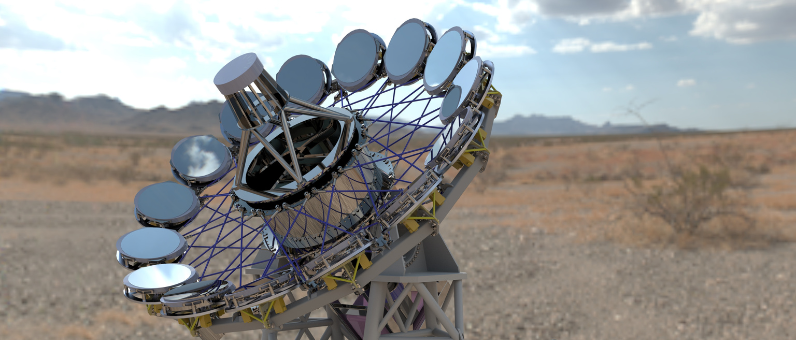
At the center of our work is the Living Sky Observatory (LSO) in Tenerife, developed in partnership with Light Bridges and the Instituto de Astrofísica de Canarias (IAC / IACTEC). The Two-Meter Twin Telescope (TTT) is already a fully robotic system producing scientific data. Our work is to take it further. We are developing:
- AI-assisted scheduling and control
- Real-time data pipelines and quality monitoring
- Supervisory autonomy architectures for observatory operations
- Governance frameworks for accountable AI-assisted science
This is not yet a fully autonomous system — and that is intentional. We are building the transition carefully: from pre-scripted operations → to adaptive systems → to governed autonomy. A key part of this effort is the Decision Provenance Log, an auditable record of how decisions are made, which will underpin the first draft of the Sky Constitution.
Why this matters beyond one telescope
The next generation of observatories — including the Vera C. Rubin Observatory — will produce unprecedented volumes of data. They will require a global network of:
- Intelligent follow-up facilities
- Fast characterization systems
- Trusted auditable decision-making
The TTT is being developed as one of those nodes. This same infrastructure also supports:
- SELF (Small ExoLife Finder)
- ELF (ExoLife Finder)
Next-generation systems designed to directly image exoplanets and detect biosignatures.
Expanding the infrastructure layer
This year we also joined the CANA-QKD Consortium (Eurostars Project 9796), advancing quantum-secured communications between the Canary Islands and Canada. At the STARMUS 2025 festival, we introduced ELF and SELF to the global scientific community, helping initiate the coalition these systems will require.
The Hunt
Project OVERDRIVE — discovery at the limits
If LSO is where we build infrastructure, Project OVERDRIVE is where we test it. OVERDRIVE targets one of the hardest problems in astronomy:
- Detecting faint, slow-moving objects
- In the outer Solar System
- At the limits of current observational capability
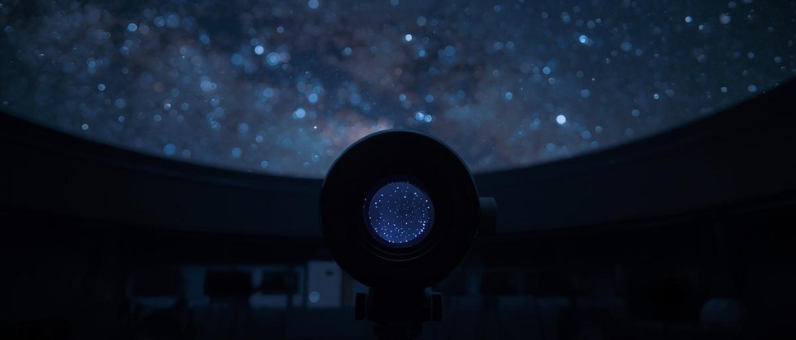
OVERDRIVE is not just a search program. It is a governed discovery framework. The pipeline integrates:
- Deterministic pre-filtering
- AI-assisted candidate detection
- Expert validation
- Structured human participation (after validation stages)
This is what responsible AI-assisted science looks like in practice.
In 2026, OVERDRIVE launches its first full campaign as a governed, AI-assisted discovery program. Its primary output is not expected to be discoveries alone — but a validated model of human–AI scientific collaboration, including:
- Transparent, auditable workflows
- Structured validation processes
- Early implementations of decision provenance
As next-generation surveys begin producing massive alert streams, these frameworks will become essential.
The People
Life & Meaning in the Cosmos
In partnership with the University of San Francisco, we launched:
Life & Meaning in the Cosmos
An interdisciplinary program combining:
- Astrophysics and data analysis
- AI tools and observational workflows
- Philosophy, ethics, and theology
- Arts and cultural perspectives
Participants worked with real data and explored the meaning of discovery across disciplines.
Why this matters
The discovery of life beyond Earth will not be just scientific. It will be civilizational.
We are building not only the capability to detect life — but the frameworks to understand what that discovery means.
Year Two: From Foundation to Demonstration
In 2026, CGF moves from foundation-building to operational demonstration:
- First draft of the Sky Constitution released for community discussion
- Project OVERDRIVE launched as a governed discovery program
- Expansion of Mission: Exoplanets internationally
- New collaborations across NASA, NSF, European, and global partners
- Creation of a Spanish/European CGF entity in Tenerife
- Growth of our affiliated scientist network
These are not separate initiatives. They are expressions of one idea: AI-enabled science must bebuilt carefully, governed early, and opened globally.
Looking Ahead
The next generation of observatories is coming online. They will produce:
- Vast data
- Consequential discoveries
- Questions beyond any single discipline
What CGF Builds
At that intersection, CGF focuses on:
- Technical infrastructure → making autonomous discovery trustworthy
- Educational programs → making discovery meaningful
- Global collaborations → making discovery accessible
Acknowledgements
This first year was made possible by a community of partners, collaborators, and supporters who share a commitment to advancing astronomy, AI, and global scientific collaboration.
We are especially grateful to:
- Light Bridges for their operational partnership and shared vision in developing the Living Sky Observatory
- Instituto de Astrofísica de Canarias (IAC / IACTEC) for scientific collaboration and continued engagement
- University of San Francisco for its partnership and shared belief in connecting scientific discovery with education, reflection, and public engagement
- ICEX España Exportación e Inversiones, an entity of Spain’s Ministry of Economy, Trade and Business, for supporting international talent and collaboration
- The Government of the Canary Islands for its commitment to positioning the region as a global hub for advanced astronomical research
- Hogan Lovells for their pro bono legal support, with special thanks to Steve Kaufman and Howard Silver
We also extend our sincere thanks to all contributors to Life & Meaning in the Cosmos, whose work brought together perspectives from science, philosophy, theology, ethics, technology, and the arts. Their intellectual generosity and commitment were essential to the spirit and success of the program.
Finally, we acknowledge the broader network of collaborators, advisors, and contributors whose time and expertise have been invaluable and who continue to support this work.